

Unnamed sources cited by report in Financial Times point to natural advantages of goegraphical position, sea water for cooling, renewable energy and opportunity to attract investment
Saudi Arabia will scale back its hugely ambitious NEOM megaproject to create a new livable region in the desert in the northwest of the country, on the Red Sea coast. The project was announced in 2017 by Crown Prince Mohammad Bin Salman and was a cornerstone of his Vision 2030. It was to cover about 26,500 square km, roughly the size of Belgium (see map below).
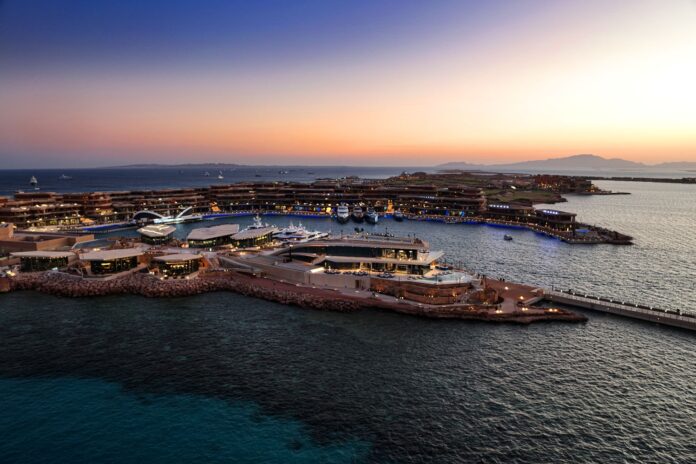
The image above, from 27 October 2024, shows Sindalah, a luxury island destination and the first physical showcase of NEOM.
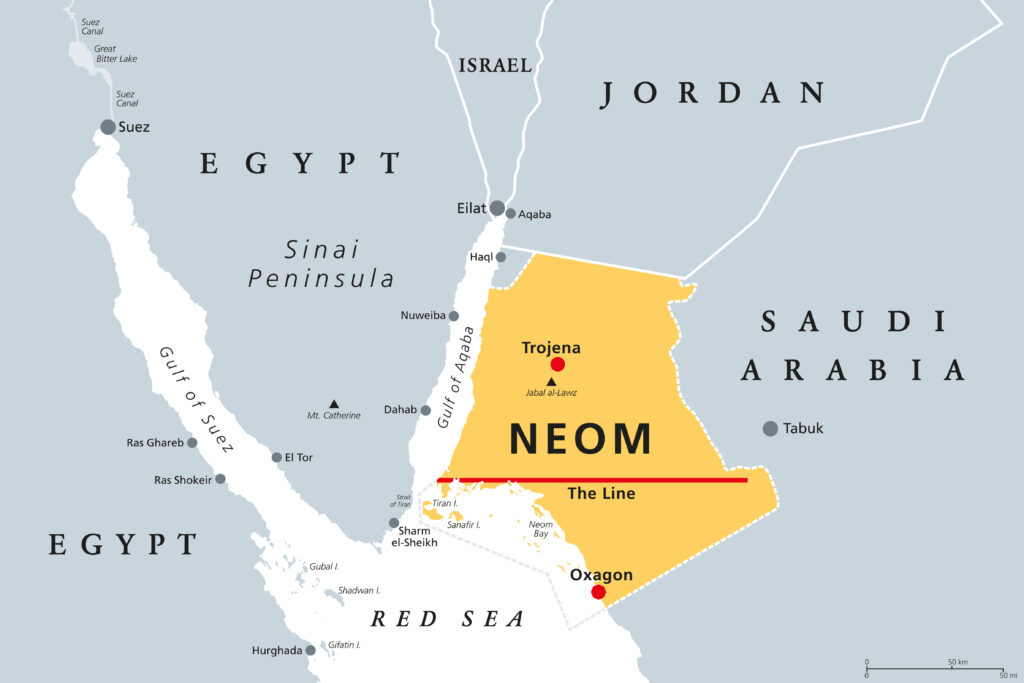
NEOM was due for completion in 2030 and included plans for a city called The Line – a row of 500m tall skyscrapers stretching for some 200km. However NEOM suffered many delays and cost overruns, as well as criticism for potential environmental damage and being unrealistic, among other things.
In addition, Saudi Arabia is hosting the Expo international trade fair in 2030 and the football World Cup in 2034, both of which involve large scale investment. Work on NEOM was paused in 2025 while the government looked at its options in a year-long review which is scheduled to conclude in this quarter.
According to a report in the Financial Times [subscription needed], focus for the region will be more on industry, such as becoming a hub for data centres. Its location means sea water can be used for cooling and the Crown Prince is keen to make his country a leader in AI infrastructure – a hub for data centres to power AI – to attract inward investment and high profile international partners.
An unnamed source cited by the FT said the location had other advantages too, such as digital infrastructure and its position at the crossroad of three continents (Africa, Asia and Europe), plus almost limitless renewable energy and available land.